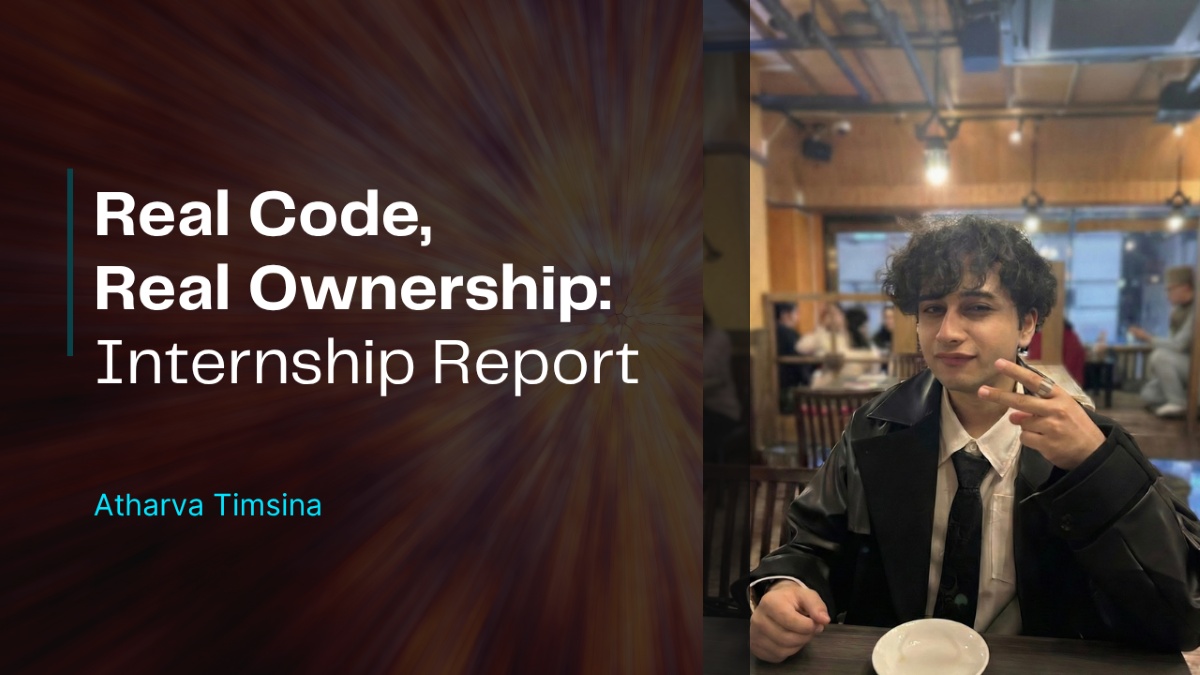
Real Code, Real Ownership: Internship Report

I’m Atharva, a sophomore studying Media Sciences and Engineering at the University of Tsukuba under a full MEXT scholarship. I joined Colorkrew as a SaaS Software Engineering Intern in February 2026.
My background is in functional programming, compilers, and systems design. Before entering the corporate world, I spent my time building things from first principles—like designing a programming language in Haskell, complete with a Hindley-Milner type inference engine (debatable if it was fun). For the longest time, I viewed software engineering through an academic, theoretical lens.
I had little prior experience navigating massive enterprise SaaS environments when I started. But I was curious to see how the thinking I applied to compilers would translate to a real-world, commercial codebase. Looking back, that foundational focus on system internals and correctness—more than any specific web framework—was what mattered most.
In this blog, I’d like to share what makes Colorkrew’s engineering culture special, what my day-to-day as an engineering intern actually looks like, and what kind of environment you can expect if you’re ready to step into the industry.
What Makes Colorkrew Special?
When I think about what makes Colorkrew stand out, it isn’t the perks or the standard startup buzzwords. It is the reality of how the engineering division operates and how they treat their devs.
Trust and Autonomy
If I had to pick one defining characteristic of this internship, it would definitely be the level of ownership.
In many companies, interns are handed a step-by-step instruction manual, confined to safe “sandbox” environments, and assigned generic UI tweaks. At Colorkrew, you are not micromanaged. The engineering team expects you to operate as an autonomous asset. In fact, after onboarding, a lot of my tasks were done independently, with feedback from my team and mentor.
In the beginning, this level of freedom was daunting. You aren’t just writing code; you are navigating this giant rollercoaster of a codebase that real customers rely on. But over time, I realized this autonomy is intentional (how else do you learn?). It forces you to think critically, architect solutions carefully, and take responsibility for your outcomes. You are evaluated not just as a student, but also against the company’s internal engineering rubrics. That expectation accelerates your growth faster than any university course could.
Systems Thinking Over Syntax
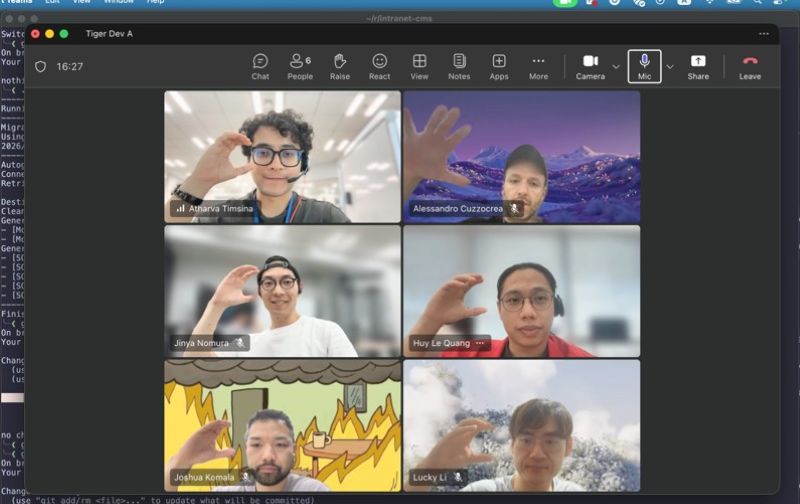
Another thing that stood out to me during my time here is how much the senior engineers care about how you think, rather than just what languages you know.
Because I only work a fragmented schedule, I have to be efficient with my time. The team doesn’t just want you to write code that works; they want you to understand the underlying logic. When I propose a solution, the discussions focus on understanding trade-offs, edge cases, and systemic impacts. Additionally, bigger features or changes, and even database migrations are thoroughly reviewed in technical discussion sessions. You will be grilled on that one edge case you think will never happen, so you better be prepared.
Titles exist, of course, but they don’t create walls. If you can present a structured, logical argument for why an API should be decoupled or how a database query should be optimized, the senior engineers will listen to you, validate your logic, and let you build it. That level of transparency builds confidence.
Furthermore, there are technical seminars held at the office every week, where senior engineers present what they’ve learned through their experience on various topics. There are always opportunities to learn and grow here.
Day-to-Day as an Engineering Intern
One of the things I enjoy most about being an engineer at Colorkrew is that the challenges are always tied to real business value. The role is dynamic, demanding, and requires a high degree of precision. In just my first few months (roughly 30 working days), I successfully completed and delivered 10 production tasks.
A large part of my time is spent working on the backend to ensure our infrastructure scales efficiently. For example, I recently diagnosed and resolved N+1 query performance bottlenecks across our backend services.
Beyond optimizations, I also work on new feature architecture. I was tasked with shipping a priority integration feature that bridged two of our core SaaS offerings.
Working on a cross-product API gateway means acting as a technical bridge. You have to consider how different systems communicate, how to decouple logic effectively, and how to maintain a smooth user experience across the layout ecosystem. Delivering this within a tight window was challenging but seeing it go live and immediately improve user discoverability was incredibly fulfilling.
More Than a Job Description
At this point, you may be thinking, “Is this really just a highly demanding workspace with nothing else? Sounds stressful”, but the thing is, it isn’t.
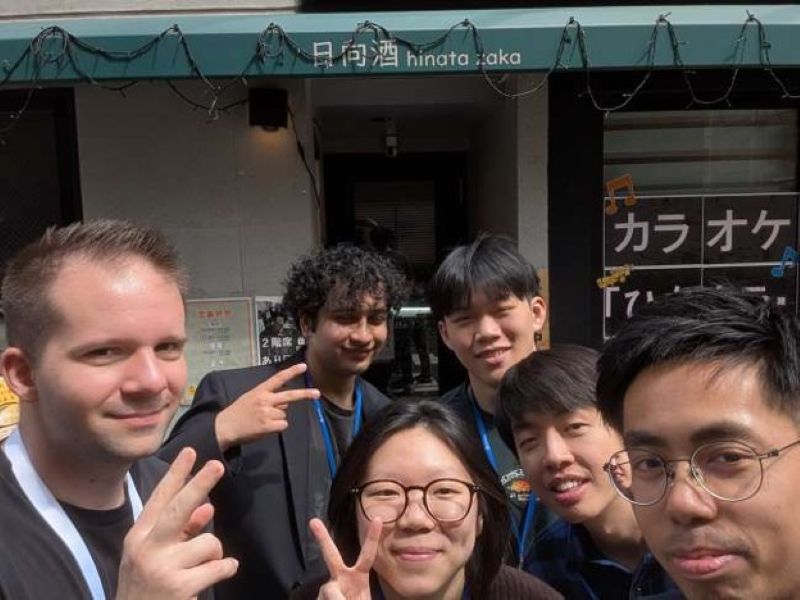
The folks at Colorkrew are some of the kindest, most accommodating people you’ll meet. Having trouble syncing your university schedule and work timings? No problem, take some time off. Need to work remotely because you really just can’t not take a class? Sure. And did I mention that lunches and dinners with coworkers are 50% on the company?
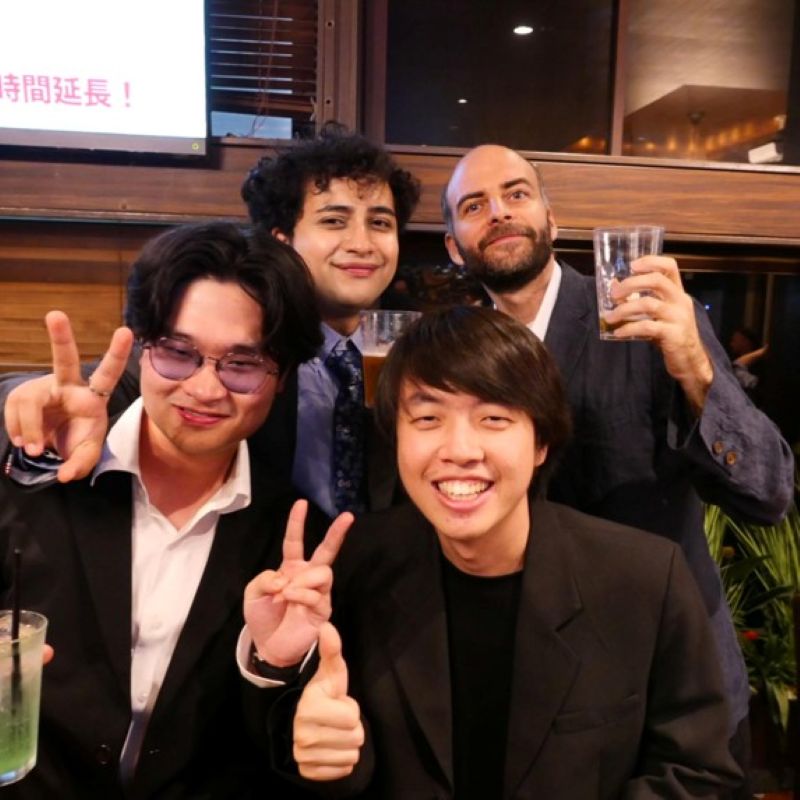
Additionally, for those of us who find speaking or communicating in Japanese difficult, the culture at Colorkrew is to communicate in English. You’ll feel at home. We’ve even got after-work games, game dev sessions, parties, you name it. Colorkrew knows how to have fun.
Last but not the least…
If I had to summarize my role here, it would be this: I am trusted to look at a complex backend problem, design a logical solution, and ship it to production while ensuring system correctness.
It involves dozens of small steps—navigating legacy code, analyzing performance data, writing decoupled logic, and communicating with senior staff. For someone who enjoys connecting dots and working through complex systems, this role feels exactly like what software engineering is meant to be.
A Message to Future Teammates
If there’s one thing I’ve learned so far, it’s that genuine technical growth rarely happens in perfectly safe, highly structured environments. It happens when you are trusted with responsibility and surrounded by engineers who hold you to a high standard.
The onboarding pipeline here is strict, but you are evaluated fairly. Colorkrew isn’t just a place where you complete assigned homework; it’s a place where you are expected to think, question, and take real ownership of enterprise-grade software. Making mistakes is part of the job, but so is learning from them. And of course, with working hard comes chilling too.
If you are a student who wants to completely bypass the traditional, slow-paced recruitment track—if you enjoy solving hard problems, optimizing systems, and continuously pushing yourself to be a better engineer—you might find this environment just as rewarding as I do.
