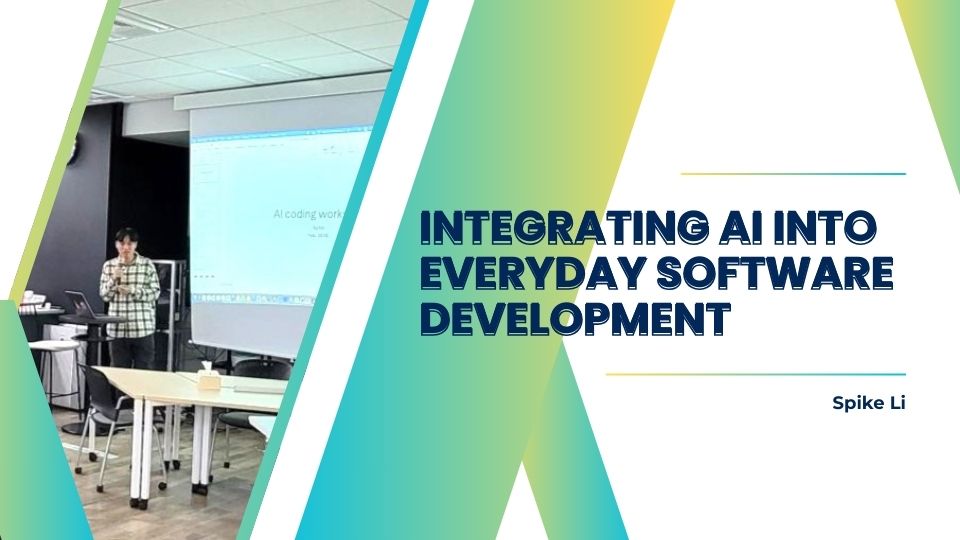
Integrating AI into Everyday Software Development

Why AI Must Become a Core Engineering Capability
We believe that AI is no longer just a productivity tool, but a fundamental component of modern software development.
For an engineering organization, the real challenge is not whether to use AI, but how to systematically build the capability to use it well.
About half a year ago, we began encouraging our engineers to incorporate AI into their daily work. While some quickly became proficient, others remained hesitant—especially when working on production-level systems. This hesitation is understandable. Engineers are responsible for stability, quality, and delivery, and in such environments, unfamiliar tools are often avoided even when they hold potential value.
We realized that simply encouraging AI usage was not enough to change behavior at an organizational level. If we wanted AI to become a shared capability rather than an individual preference, we needed a more deliberate approach.
Designing a Workshop to Transform Behavior
That led us to design an AI coding workshop with clear constraints.
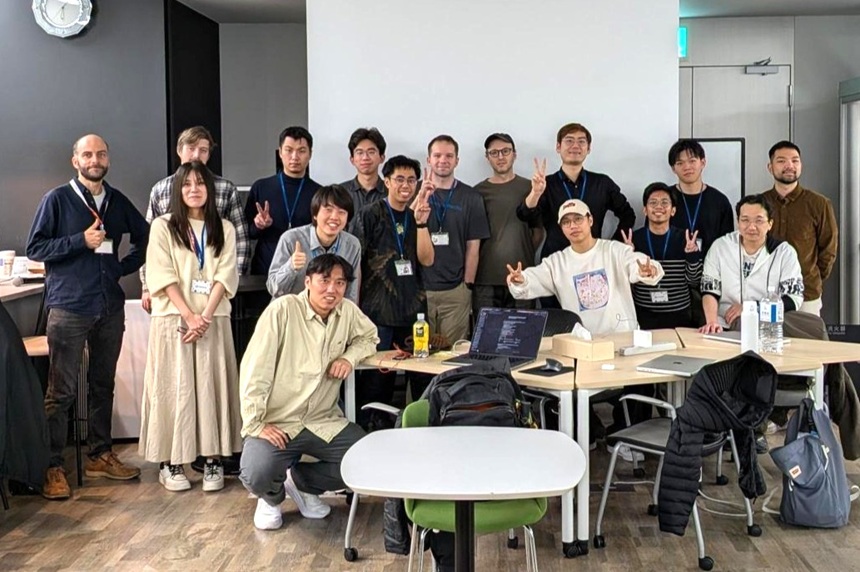
From February 2nd to February 6th, we held our first in-person AI coding workshop at our office. For the entire week, participants were required to generate all code using AI. Writing code manually was intentionally prohibited. This was not about replacing human engineers with AI, but about shifting where engineers focus their effort: from typing code to framing problems, evaluating outputs, and making architectural decisions with AI as a collaborator.
In addition to hands-on work, engineers who were already experienced in using AI shared practical techniques in technical sessions. Rather than a top-down training program, we emphasized peer learning and open discussion. For five days, engineers worked on real engineering tasks, experimenting with how AI could be integrated into actual product development workflows.
What We Learned from the Week of AI‑Only Development
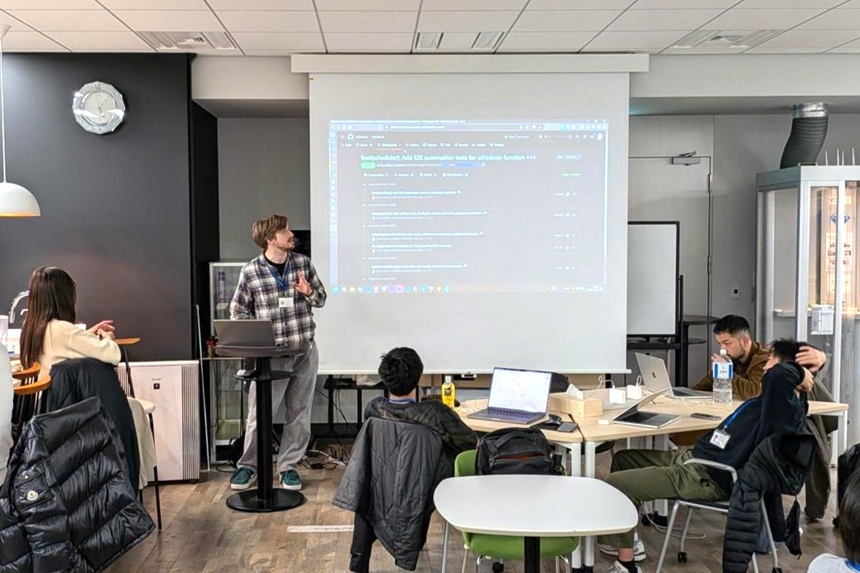
On the final day, participants presented what they had tried, what worked, what failed, and how they planned to use AI going forward. Although we made it clear that all generated code could be discarded, many members still completed meaningful development tasks. More importantly, several presentations demonstrated how AI could be applied to areas such as internal business automation and team workflow improvement.
By intentionally lowering the pressure to produce perfect final outputs, we created space for experimentation. This allowed engineers to explore creative approaches that would rarely emerge under normal delivery constraints.
Investing in Long‑Term Engineering Capability
We recognize that dedicating a full week to a workshop can temporarily reduce short-term output. This was a conscious decision. Given the speed at which AI is reshaping software development, failing to adapt our engineering practices would pose a far greater long-term risk than a temporary slowdown. We see this workshop as an investment in long-term productivity and in building durable engineering capabilities.
This initiative also reflects our commitment to developing our people—one of our core values as an organization. We believe that sustained performance improvements will come not from isolated tool adoption, but from continuously evolving how we work as engineers.
Building a Future Where AI Is Embedded in Daily Development
Only about half of the engineering team participated in this first workshop. Even so, we observed that with the right structure and constraints, engineers were able to quickly understand AI and apply it in practical ways. Based on this experience, we plan to continue hosting workshops and technical seminars so that every engineer can further develop their AI skills.
Our goal is to establish a solid foundation where AI is naturally integrated into everyday product development—not as an optional experiment, but as a core part of how we build software.